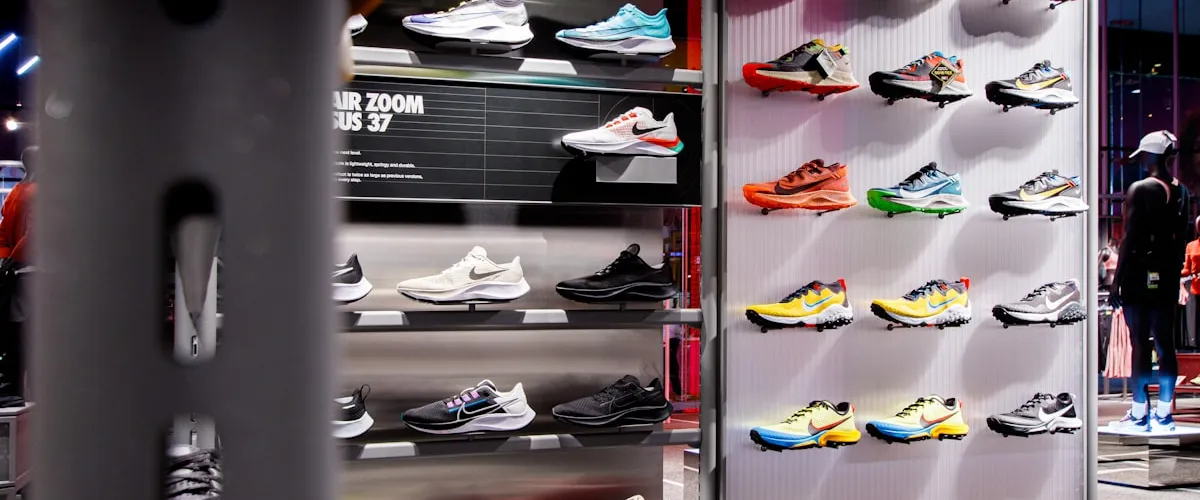
Nike is in the middle of the most significant distribution strategy change in its history. Over the past four years, the company has systematically reduced the number of wholesale retail partners carrying its products while aggressively expanding its own direct-to-consumer (DTC) channels. For restockers, this shift fundamentally changes where and how you can buy Nike products, which retailers matter, and what strategies are most effective. This is not a subtle evolution. It is a wholesale restructuring of the sneaker retail landscape.
What Is Nike’s DTC Strategy?
Direct-to-consumer means Nike sells to you through its own channels rather than through third-party retailers. Nike’s DTC channels include:
- Nike.com: The primary online storefront
- Nike SNKRS app: Dedicated platform for limited and hype releases
- Nike app: General shopping app with member-exclusive products
- Nike retail stores: Company-owned brick-and-mortar locations
- Nike Factory stores: Outlet locations for older and discounted inventory
- Nike By You (NikeID): Custom sneaker platform
The strategy is straightforward: own the relationship with the customer, capture the full retail margin (instead of splitting it with wholesale partners), and control the brand experience from discovery to purchase.
The Numbers Behind the Shift
| Year | DTC Revenue (% of total) | Wholesale Revenue (% of total) | Number of Wholesale Partners |
|---|---|---|---|
| 2019 | 31% | 69% | ~30,000 |
| 2021 | 39% | 61% | ~25,000 |
| 2023 | 44% | 56% | ~15,000 |
| 2025 | 52% | 48% | ~8,000 |
| 2026 (projected) | 55-58% | 42-45% | ~6,000 |
Nike crossed the 50% DTC threshold in 2025, meaning more than half of its revenue now comes through channels it owns and operates directly. The number of wholesale partners has been cut by approximately 80% since 2019. This is not trimming around the edges; it is a fundamental restructuring.
Which Retailers Have Lost Nike
The most impactful changes for restockers involve which retailers no longer carry Nike products or carry significantly reduced assortments:
Retailers That Have Lost or Reduced Nike Access
- Foot Locker: Once Nike’s largest wholesale partner, now carries a significantly reduced Nike assortment. Select Tier 1 Foot Locker locations retain some access, but many stores have been cut entirely.
- DSW / Designer Shoe Warehouse: Dropped from Nike’s wholesale network
- Zappos: Significantly reduced access
- Dillard’s: Dropped
- Urban Outfitters: Dropped
- Numerous independent sneaker boutiques: Many smaller retailers that built their businesses on Nike access have been terminated
Retailers That Retain Nike Partnership
- Dick’s Sporting Goods: Maintained as a strategic partner (Nike has an ownership stake)
- JD Sports: Retained for international markets and select US locations
- Foot Locker (select locations): Reduced but not eliminated, following renegotiation in 2023-2024
- Nordstrom: Retained for premium positioning
- SSENSE: Retained for fashion-forward positioning
The pattern is clear: Nike is keeping partners that serve specific strategic purposes (athletic retail positioning, premium fashion context, international reach) while cutting partners that compete on price or do not align with Nike’s brand vision.
The Partial Course Correction
It is important to note that Nike’s DTC strategy has not been entirely smooth. In 2024, Nike acknowledged that it had pulled too aggressively from wholesale and began selectively restoring some partnerships. This partial reversal was driven by:
- Revenue shortfalls: DTC channels did not grow fast enough to offset wholesale losses in some categories
- Discovery problem: Wholesale partners serve as product discovery channels, especially for consumers who are not already Nike loyalists
- Competitor gains: Brands like New Balance, Asics, and Hoka aggressively courted the retailers Nike abandoned, gaining shelf space and market share
- Inventory management: Nike ended up with excess inventory in its own channels that wholesale partners would have absorbed
The course correction does not reverse the overall strategy. Nike is still moving toward a DTC-majority model. But the pace has moderated, and the company is being more selective about which wholesale relationships to maintain rather than executing a blanket reduction.
What This Means for Restockers
The DTC shift has specific, practical implications for anyone trying to buy Nike products at retail:
Fewer Chances, More Concentrated
With fewer retail partners, there are fewer separate opportunities to purchase each product. A release that previously would have been available at Nike.com, SNKRS, Foot Locker, Finish Line, Champs, Eastbay, JD Sports, and dozens of boutiques might now only be available through Nike.com, SNKRS, and a handful of select partners.
This concentration means:
- Each individual release channel sees higher competition
- Failure on SNKRS is harder to offset by trying other retailers
- The importance of any single retailer’s anti-bot measures increases
- Multi-platform monitoring tools become less useful for Nike releases
SNKRS Becomes Even More Important
As Nike reduces wholesale distribution, a larger percentage of limited releases flow through SNKRS. The app is already the primary platform for hype releases, and that dominance is intensifying. For restockers targeting Nike, mastering SNKRS is no longer optional; it is the primary path to retail purchase.
Our comprehensive guide to Nike SNKRS restocks covers the strategies, timing, and techniques that maximize your chances on the platform.
Nike Membership Matters More
Nike’s DTC strategy is built around its membership ecosystem. Nike members get:
- Early access: Member-exclusive purchase windows before general release
- Exclusive Access: Algorithm-selected opportunities to purchase hyped products before they officially drop
- Member Days: Periodic sales events with additional discounts for members
- SNKRS Pass: Location-based access to in-store pickup for SNKRS releases
- Personalized product recommendations: Algorithm-driven product suggestions based on purchase and browsing history
The membership is free, but Nike uses engagement data (app opens, content views, purchase history, workout tracking) to inform its Exclusive Access algorithm. Members who actively use the Nike ecosystem reportedly receive more access opportunities, though Nike has not disclosed the specific algorithm criteria.
Nike.com Restocks Follow Specific Patterns
With more inventory flowing through Nike.com, understanding the site’s restock patterns becomes critical:
| Release Type | Typical Schedule | Best Strategy |
|---|---|---|
| SNKRS Draw | Announced 1-7 days in advance, 10 AM EST | Enter draw during full window |
| SNKRS FCFS | Announced, 10 AM EST | Fast checkout, pre-loaded payment |
| Nike.com General Release | 10 AM EST, sometimes 7 AM | Monitor + fast checkout |
| Nike.com Restock | Unpredictable, often early morning EST | Alert tools essential |
| Nike App Exclusive Access | Push notification, limited time | Enable all app notifications |
| Member Days | Announced via app, scheduled events | Mark calendar, pre-browse |
The Regional Disparity Problem
Nike’s DTC infrastructure is not equally distributed. Major metropolitan areas have multiple Nike retail stores, Factory stores, and partner locations. Rural areas and smaller cities may have no physical Nike retail presence at all. As DTC channels absorb more of the product allocation, consumers in areas without physical stores become entirely dependent on online channels, where competition is most intense.
This geographic inequity is a significant criticism of the DTC model. When a hyped release was available at dozens of Foot Locker and Champs locations across the country, a consumer in Topeka, Kansas had local options. Now, that same consumer competes against millions of SNKRS users for the same limited online allocation.
Impact on the Resale Market
Nike’s DTC shift has notable effects on the secondary market:
Supply Constraint Increases
Fewer retail channels means fewer total units available at retail for any given release. While Nike controls total production volume regardless of distribution strategy, the DTC model creates bottlenecks at the point of sale. SNKRS draw success rates remain in the single digits for popular releases, and reducing alternative purchasing channels does not help.
This supply constraint generally supports higher resale prices, which benefits scalpers and professional resellers. The DTC strategy, while motivated by margin improvement, has the unintended consequence of strengthening the scalper business model for Nike products specifically.
Authentication Becomes More Important
As Nike tightens distribution, counterfeit products fill the gap. Consumers who cannot buy at retail and refuse to pay resale markup are vulnerable to purchasing counterfeits marketed as authentic. Nike’s own authentication measures (including NFC chips embedded in recent releases and the Nike Authenticity Guarantee for verified resellers) are attempts to address this, but the counterfeit market for Nike products remains substantial.
StockX and GOAT authentication remain the most reliable way to ensure you receive genuine products when buying resale. For more on navigating the secondary market, see our StockX buying guide.
How Other Brands Are Responding
Nike’s DTC strategy has triggered responses across the sneaker industry:
Adidas
Adidas has pursued a similar but less aggressive DTC shift, maintaining broader wholesale partnerships while growing its CONFIRMED app and adidas.com. Adidas learned from Nike’s inventory management struggles and has moved more cautiously, maintaining wholesale relationships as a safety valve for excess inventory.
New Balance
New Balance has been the biggest beneficiary of Nike’s wholesale pullback. The brand aggressively courted retailers that Nike abandoned, gaining significant shelf space at Foot Locker and other chains. New Balance’s resale market has grown substantially as the brand’s cultural relevance has increased, particularly for models like the 550, 2002R, and collaborations with designers like Aime Leon Dore.
Asics and Hoka
Both brands have expanded their wholesale footprint as Nike retreated, gaining market share in performance running and lifestyle categories. Their availability at traditional retail stores gives consumers more options, though neither brand has the same hype-driven limited release model as Nike.
Strategies for the DTC Era
Given the new reality, here are the most effective approaches for restocking Nike products in 2026:
1. Maximize Your Nike Membership
Create a Nike account if you do not have one. Use the Nike app regularly. Track your runs with Nike Run Club. Engage with content. The Exclusive Access algorithm reportedly favors engaged members, so building your profile is a long-term investment.
2. Enable Every Notification
Turn on push notifications for the SNKRS app, Nike app, and email. Exclusive Access windows are time-limited (often 30-60 minutes), and missing the notification means missing the opportunity.
3. Diversify Across Remaining Partners
Identify which Nike wholesale partners still operate in your area or online. For each release, check availability at every partner, not just SNKRS. Partners like JD Sports and select Foot Locker locations sometimes have inventory that SNKRS does not.
4. Use Restock Alert Services
Nike.com and SNKRS inventory changes can be detected by monitoring tools before they are visible on the front end. Restock monitoring tools and Discord alert servers provide the earliest possible notification of restocks, which is particularly valuable for FCFS releases.
5. Consider In-Store When Possible
Nike’s own retail stores sometimes receive inventory that does not appear online, or release products in-store on different schedules than digital. If you live near a Nike retail location, maintaining a relationship with the store (visiting regularly, asking staff about upcoming releases) can provide advantages that pure online competitors do not have.
6. Expand Your Brand Horizon
The most practical response to Nike’s DTC restrictions may be to explore other brands. New Balance, Asics, Hoka, Adidas, and Salomon all offer compelling products that are easier to purchase at retail. The sneaker market is more diverse than at any point in recent history, and fixating exclusively on Nike means competing in the most difficult marketplace.
FAQ
Why is Nike moving to direct-to-consumer?
The primary motivation is margin improvement. When Nike sells through a wholesale partner like Foot Locker, it receives roughly 50% of the retail price (the wholesale price). When it sells direct to the consumer through Nike.com or SNKRS, it captures the full retail margin. At Nike’s scale, shifting 10% of revenue from wholesale to DTC can add billions in profit. Secondary benefits include controlling the brand experience, owning customer data, and reducing dependency on third-party partners.
Does DTC mean Nike products are harder to buy?
For general release products (standard Air Force 1s, Pegasus running shoes, etc.), DTC actually makes purchasing straightforward since Nike.com has massive inventory. For limited and hyped releases, yes, DTC concentration makes purchasing harder because fewer retail channels mean fewer individual chances to buy, and SNKRS draw success rates remain very low. The practical impact depends entirely on whether you are targeting general releases or limited editions.
Can I still buy Nike at Foot Locker?
Yes, but with significant limitations. Foot Locker’s Nike assortment has been substantially reduced, and many locations no longer carry Nike at all. Select Tier 1 Foot Locker locations (typically flagship stores in major cities) retain access to some Nike products, including some limited releases. The days of every Foot Locker being a reliable Nike source are over, however.
Is Nike’s DTC strategy working?
From a financial perspective, the results are mixed. DTC margins are higher per unit, but Nike has experienced revenue growth slowdowns and inventory management challenges that its previous wholesale model handled more effectively. Nike’s stock price has underperformed compared to competitors like New Balance and On Running during the transition period. The company’s 2024 acknowledgment that it pulled from wholesale too aggressively suggests the strategy requires ongoing calibration.
Should I pay for Nike membership or is the free tier enough?
Nike membership is entirely free. There is no paid tier. All members have access to early release information, SNKRS draws, and the potential for Exclusive Access opportunities. The variable is engagement: members who actively use Nike apps, track workouts with Nike Run Club, and browse product content reportedly receive more favorable treatment from the Exclusive Access algorithm. The investment is time and engagement, not money.