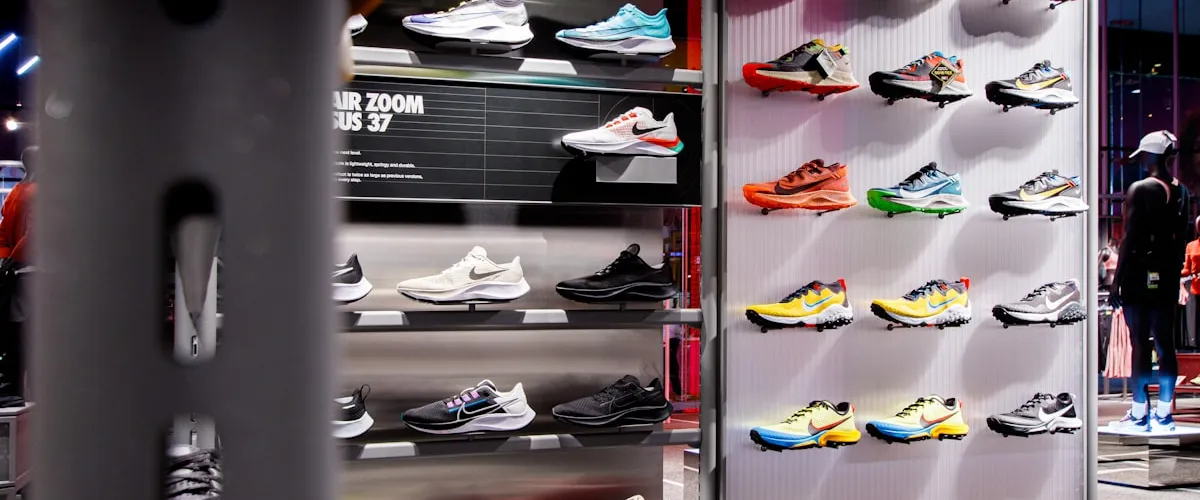
Getting the right sneaker size sounds simple until you realize that a size 10 in Nike fits completely different from a size 10 in Adidas, New Balance, or ASICS. Add in model-specific variations within the same brand, and sizing becomes one of the biggest pain points in sneaker culture. This guide eliminates the guesswork with brand-by-brand breakdowns, conversion charts, and model-specific recommendations.
Why Sneaker Sizing Is So Inconsistent
Before diving into specifics, understanding why sizing varies so much helps you make better decisions across brands.
The Root Causes of Sizing Inconsistency
- Different lasts — Each brand uses different foot-shaped molds (lasts) to construct shoes. Nike’s last is narrower than New Balance’s, which is why the same size number feels different.
- Regional manufacturing — Factories in different countries use slightly different tolerances. A shoe made in Vietnam may fit differently from the same model made in China.
- Material stretch — Primeknit stretches more than leather, which stretches more than synthetic overlays. The same size in different materials produces different fits.
- Marketing sizing — Some brands size slightly small to make consumers feel better about ordering a smaller number. This is not officially acknowledged but is widely recognized in the industry.
- Insole thickness — A thicker insole reduces interior volume, making the shoe fit tighter without changing the exterior dimensions.
How to Measure Your True Foot Size
Before comparing across brands, establish your baseline measurement.
The Brannock Device Method
The most accurate way to determine your foot size is with a Brannock Device (the metal measuring tool at shoe stores). Here is how to use one properly:
- Stand on the device with your full weight on the foot being measured
- Record three measurements: overall length, arch length, and width
- Use the larger of the two length measurements as your starting point
- Measure both feet — most people have one foot 0.25–0.5 sizes larger than the other
- Always buy for your larger foot
The At-Home Measurement Method
If you do not have access to a Brannock Device:
- Place a piece of paper against a wall on a hard floor
- Stand on the paper with your heel touching the wall
- Mark the tip of your longest toe with a pen
- Measure the distance from the wall to the mark in centimeters
- Reference the conversion chart below
US Size to Centimeter Conversion
| US Men’s | US Women’s | UK | EU | CM |
|---|---|---|---|---|
| 6 | 7.5 | 5.5 | 38.5 | 24.0 |
| 6.5 | 8 | 6 | 39 | 24.5 |
| 7 | 8.5 | 6 | 40 | 25.0 |
| 7.5 | 9 | 6.5 | 40.5 | 25.5 |
| 8 | 9.5 | 7 | 41 | 26.0 |
| 8.5 | 10 | 7.5 | 42 | 26.5 |
| 9 | 10.5 | 8 | 42.5 | 27.0 |
| 9.5 | 11 | 8.5 | 43 | 27.5 |
| 10 | 11.5 | 9 | 44 | 28.0 |
| 10.5 | 12 | 9.5 | 44.5 | 28.5 |
| 11 | 12.5 | 10 | 45 | 29.0 |
| 11.5 | 13 | 10.5 | 45.5 | 29.5 |
| 12 | 13.5 | 11 | 46 | 30.0 |
| 13 | 14.5 | 12 | 47.5 | 31.0 |
| 14 | 15.5 | 13 | 48.5 | 32.0 |
Note that conversions between systems are not always exact. EU and UK sizing in particular can vary by brand.
Nike Sizing Guide
Nike runs narrow across most models. If you have average-width feet, most Nike shoes fit true to size. Wide-footed buyers should go half size up as a default.
Nike Model-Specific Sizing
| Model | Fit Profile | Recommendation |
|---|---|---|
| Air Jordan 1 | True to size, slightly narrow | TTS |
| Air Jordan 3 | Slightly wide midfoot | TTS (narrow feet: half down) |
| Air Jordan 4 | True to size | TTS |
| Air Jordan 11 | Long and narrow | Half size down |
| Air Force 1 | Runs large | Half size down |
| Dunk Low | True to size | TTS |
| SB Dunk Low | Padded, snug | Half size up |
| Air Max 90 | True to size, narrow toebox | TTS (wide feet: half up) |
| Air Max 1 | True to size | TTS |
| Air Max 97 | Long, narrow | Half size down |
| Blazer Mid | Narrow | Half size up for wide feet |
| Vapormax | Tight Flyknit upper | Half size up |
| React Element | True to size | TTS |
Nike Width Options
Nike offers limited width options compared to some brands:
- Standard (D for men, B for women) — The default width for all Nike shoes
- Wide (2E for men) — Available on select running models and Air Force 1s
- Extra Wide (4E) — Available on very few Nike models
If you need wide or extra wide, Air Force 1s and select Air Max models are your best options in the Nike lineup.
Adidas Sizing Guide
Adidas generally runs slightly larger than Nike. If you wear a 10 in Nike, you may find a 9.5 in Adidas fits similarly. However, this varies significantly by model.
Adidas Model-Specific Sizing
| Model | Fit Profile | Recommendation |
|---|---|---|
| Yeezy Boost 350 V2 | Very tight, narrow | Half size up |
| Yeezy 700 V1/V2 | True to size | TTS |
| Yeezy Slide | Very small | Full size up |
| Yeezy Foam Runner | Small | Full size up |
| Ultraboost | Snug Primeknit | Half size up for wide feet |
| NMD R1 | Runs half big | Half size down |
| Stan Smith | True to size | TTS |
| Superstar | Runs long | Half size down |
| Forum Low | True to size | TTS |
| Samba | Narrow | TTS (wide feet: half up) |
| Gazelle | True to size | TTS |
| Campus 00s | Slightly large | Half size down |
For Yeezy-specific sizing details, our Yeezy restock strategy guide includes an expanded sizing section with tips for each silhouette.
Nike to Adidas Size Conversion
Because the two brands size differently, here is a practical conversion guide:
| Nike Size | Adidas Equivalent | Notes |
|---|---|---|
| 8 | 8 or 7.5 | Model-dependent |
| 9 | 9 or 8.5 | Ultraboost/NMD go half down |
| 10 | 10 or 9.5 | Yeezy 350 go half up from Nike |
| 11 | 11 or 10.5 | Stan Smith/Superstar go half down |
| 12 | 12 or 11.5 | Same pattern continues |
The safest approach: if your Nike TTS is 10, try Adidas at 10 first. Adjust half down for Superstars/NMDs or half up for Yeezys.
New Balance Sizing Guide
New Balance is known for the most consistent and generous sizing in the industry. Their width options are the best available from any major sneaker brand.
New Balance Model-Specific Sizing
| Model | Fit Profile | Recommendation |
|---|---|---|
| 550 | True to size, slightly wide | TTS (narrow feet may prefer half down) |
| 990v6 | True to size, roomy | TTS |
| 2002R | True to size | TTS |
| 574 | True to size, accommodating | TTS |
| 327 | Runs slightly small | Half size up |
| 1906R | True to size | TTS |
| 530 | Narrow for NB | TTS |
| 9060 | True to size, slightly wide | TTS |
New Balance Width Options
New Balance offers the most comprehensive width range:
| Width Code | Description | Availability |
|---|---|---|
| B (Men) / 2A (Women) | Narrow | Select models |
| D (Men) / B (Women) | Standard | All models |
| 2E (Men) / D (Women) | Wide | Most models |
| 4E (Men) / 2E (Women) | Extra Wide | Many models |
| 6E (Men) | Ultra Wide | Select models |
This width range makes New Balance the go-to brand for people who struggle with Nike and Adidas width constraints. The 990 series in particular is available in every width from B to 6E.
Other Brand Sizing References
ASICS
| Model | Fit | Recommendation |
|---|---|---|
| Gel-Lyte III | Narrow, split tongue | Half size up |
| Gel-Lyte V | True to size | TTS |
| Gel-Kayano 14 | True to size, athletic fit | TTS |
| Gel-1130 | True to size | TTS |
Converse
| Model | Fit | Recommendation |
|---|---|---|
| Chuck Taylor (classic) | Runs full size large | Full size down |
| Chuck 70 | Runs slightly large | Half size down |
| One Star | True to size | TTS |
| Weapon | True to size | TTS |
Vans
| Model | Fit | Recommendation |
|---|---|---|
| Old Skool | True to size | TTS |
| Sk8-Hi | True to size | TTS |
| Authentic | Narrow | Half size up for wide feet |
| Era | True to size | TTS |
Reebok
| Model | Fit | Recommendation |
|---|---|---|
| Club C 85 | Runs slightly large | Half size down |
| Classic Leather | True to size | TTS |
| Question Mid | True to size | TTS |
| Instapump Fury | No half sizes | Round up if between |
Puma
| Model | Fit | Recommendation |
|---|---|---|
| Suede Classic | True to size | TTS |
| RS-X | Runs slightly big | Half size down |
| Clyde | True to size | TTS |
| Speedcat | Narrow | Half size up for wide feet |
Foot Type Considerations
Beyond length, your foot shape significantly affects how shoes fit.
Foot Width Categories
Understanding your width type helps narrow down brands and models:
- Narrow feet: Nike runs well for narrow feet. Jordan 1s, Blazers, and Air Max 97s are ideal. Avoid New Balance 990 series (too roomy) unless ordering in narrow width.
- Average feet: Most brands fit well at TTS. You have the widest selection available.
- Wide feet: New Balance in 2E or 4E width, Nike Air Force 1, Adidas Forum, and ASICS Gel-Lyte V are your best options. Avoid Nike Vapormax, Adidas NMD, and Converse Chuck Taylor.
- Extra wide feet: New Balance in 4E or 6E is essentially your only high-quality option. Some Nike running shoes come in 4E but the lifestyle/sneaker selection is extremely limited.
Arch Type Impact
Your arch type affects comfort more than size selection, but it is worth considering:
| Arch Type | Characteristics | Best Shoe Types |
|---|---|---|
| Flat/Low | Foot rolls inward (overpronation) | Shoes with medial support (NB 990, Nike Monarch) |
| Normal/Medium | Neutral pronation | Most sneakers work well |
| High | Foot rolls outward (supination) | Cushioned shoes (Ultraboost, Air Max) |
How to Handle Sizing When Buying Restocks
Restock scenarios add pressure to the sizing decision because returns are not always possible and resale carries size-specific premiums.
The Restock Sizing Decision Framework
- If you have worn the model before: Order the same size. Do not second-guess based on internet advice.
- If you have never worn the model: Reference the charts above and lean toward your dominant foot size.
- If your size sells out: Going half size up is almost always safer than half size down. You can add an insole to take up space; you cannot add space.
- If buying on resale: Verify the seller’s country of origin for the shoe. Asian-market shoes occasionally use different sizing standards.
Size Swapping Strategies
If you get the wrong size on a restock:
- Nike.com and SNKRS: Standard 60-day return policy for unworn shoes. Easy process.
- Foot Locker: 45-day return policy, both in-store and by mail.
- StockX and GOAT: No returns for sizing, but you can relist immediately. Check out our GOAT vs StockX comparison for selling fees on each platform.
- Reddit sneaker communities: Size swap threads on r/sneakermarket allow peer-to-peer size exchanges.
- Local sneaker groups: Facebook groups for your city often facilitate in-person size swaps.
Measuring Shoes You Already Own
One of the most reliable sizing methods is measuring shoes you already own and love.
The Insole Measurement Technique
- Remove the insole from a shoe that fits you perfectly
- Measure the insole length from heel to toe in centimeters
- Use that measurement against the CM column in the conversion chart above
- This gives you a more accurate starting point than foot measurement alone, because it accounts for interior shoe volume
Brand-to-Brand Translation Using Insoles
If your best-fitting shoe is a Nike Air Force 1 in size 10:
- Measure that insole: approximately 28.5 cm
- Look up 28.5 cm across brands
- Adidas at 28.5 cm = US 10.5 in most models
- New Balance at 28.5 cm = US 10.5 in D width
- Use these as starting points, then adjust for model-specific variations listed above
Kids and Grade School Sizing
For those buying youth sneakers, the sizing system is entirely different.
Youth Size Conversion
| US Youth | US Men’s Equivalent | EU | CM |
|---|---|---|---|
| 3.5Y | 3.5 | 35.5 | 22.5 |
| 4Y | 4 | 36 | 23.0 |
| 4.5Y | 4.5 | 36.5 | 23.5 |
| 5Y | 5 | 37.5 | 24.0 |
| 5.5Y | 5.5 | 38 | 24.5 |
| 6Y | 6 | 38.5 | 24.0 |
| 6.5Y | 6.5 | 39 | 24.5 |
| 7Y | 7 | 40 | 25.0 |
Grade School (GS) sizes in Jordan and Nike are popular because they retail for less ($130–$150 vs. $170–$200 for adult sizes) and cover up to US Men’s 7. Women who wear sizes 5.5–8.5 frequently buy GS sizing for a lower price point, though construction and materials may differ slightly from adult versions.
Breaking In New Sneakers
Even with perfect sizing, new sneakers often need a break-in period.
Break-In Expectations by Material
| Material | Break-In Time | Tips |
|---|---|---|
| Full-grain leather | 5–10 wears | Leather conditioner speeds the process |
| Suede | 3–5 wears | Brush with suede brush to loosen fibers |
| Canvas | 2–3 wears | Wear with thick socks initially |
| Primeknit/Flyknit | 1–2 wears | Stretches quickly, may feel loose after break-in |
| Synthetic/Patent | 5–15 wears | Slowest to break in, may never fully conform |
| Mesh | 1–3 wears | Minimal break-in needed |
If a shoe feels tight but not painful on the first wear, it will likely break in to a comfortable fit. If it causes pain, numbness, or blistering immediately, it is the wrong size — no amount of break-in will fix a fundamentally wrong size.
FAQ
Should I size up or down if I am between sizes?
Size up. Going half size up gives you room to add a thicker insole or wear thicker socks for a custom fit. Going half size down risks the shoe being uncomfortably tight with no easy fix. The only exception is models known to run large (Nike Air Force 1, Converse Chuck Taylor, Adidas Superstar), where going down to your smaller size is appropriate.
Do sneakers stretch over time?
Yes, but the amount depends on the material. Leather sneakers stretch 0.25–0.5 sizes over their lifetime. Knit materials (Primeknit, Flyknit) stretch 0.25 sizes within the first few wears but then stabilize. Canvas stretches slightly. Synthetic materials and patent leather barely stretch at all. Never buy a shoe that is too small expecting it to stretch to fit — the stretch is marginal and inconsistent.
Is there a difference between men’s and women’s sizing beyond the number?
Yes. Women’s shoes are typically built on a narrower last (B width for women vs. D width for men). A women’s size 9 and a men’s size 7.5 share the same length but the women’s version is narrower. Women with wider feet buying men’s shoes get a better width fit but should verify length using the CM measurement method. The reverse applies for men buying women’s exclusive colorways.
How do I know if I need wide-width sneakers?
If you experience any of these consistently across brands, you likely need wide-width options: toes pressing against the sides of the shoe, the upper bulging over the midsole, foot spilling over the insole edges, or discomfort across the ball of the foot that does not improve with break-in. Measure your foot width at the widest point — if it exceeds the standard width for your length on a Brannock Device, you need wide or extra-wide options.
Can I use the same size across Nike, Adidas, and New Balance?
Not reliably. Nike tends to run the narrowest, Adidas slightly larger, and New Balance the most generous. A general rule: if your perfect Nike size is 10, try Adidas at 9.5–10 (model-dependent) and New Balance at 10 in D width. Always reference the model-specific charts in this guide rather than assuming a single size works across all brands.