A sneaker collection is only as good as how you store it. You can spend hundreds of hours tracking restocks, thousands of dollars securing pairs, and build a collection that any sneakerhead would envy, only to watch it deteriorate because of poor storage. Yellowing soles, crumbling midsoles, mold growth, and creased uppers are all preventable problems that come down to how and where you keep your sneakers.
This guide covers every aspect of sneaker storage, from budget-friendly solutions for casual collectors to premium climate-controlled setups for serious enthusiasts. Whether you own 10 pairs or 100, proper storage protects your investment and keeps your collection looking fresh for years.
Why Sneaker Storage Matters
The Enemies of Sneakers
Sneakers degrade over time due to five primary factors. Understanding these threats helps you choose the right storage solution.
| Threat | What It Does | How It Happens |
|---|---|---|
| Humidity | Causes mold, mildew, and hydrolysis of midsole foam | Storing in damp basements, closets without airflow |
| UV light | Yellows soles and fades colors | Direct sunlight or fluorescent light exposure |
| Heat | Accelerates glue breakdown and material degradation | Storing in attics, garages, or near heat sources |
| Dust and dirt | Settles into materials, causing discoloration | Open shelving without covers or barriers |
| Compression | Causes permanent creasing and shape deformation | Stacking boxes, storing with heavy items on top |
The worst-case scenario is hydrolysis, a chemical process where moisture breaks down polyurethane midsole foam. This is the “crumbling sole” problem that destroys vintage sneakers. Once hydrolysis begins, it cannot be reversed. Prevention through proper storage is the only solution.
The Financial Argument
Beyond preservation, proper storage protects the financial value of your collection. Sneakers in deadstock condition with no yellowing, no creases, and original packaging can be worth 2-5x more than the same model in worn or degraded condition.
| Condition | Typical Resale Value | Example (Jordan 1 Retro) |
|---|---|---|
| Deadstock (DS), perfect box | 100% of market value | $350 |
| Deadstock, damaged box | 85-90% of market value | $298-$315 |
| Tried on, no wear | 80-85% of market value | $280-$298 |
| Light wear, well-maintained | 60-75% of market value | $210-$263 |
| Heavy wear, poor storage | 30-50% of market value | $105-$175 |
Investing $200-$500 in proper storage can preserve thousands of dollars in collection value over time.
Storage Solutions by Budget
Budget Tier: Under $100
Original Shoe Boxes
The simplest storage solution is the box your sneakers came in. Original boxes provide decent protection from dust and light, and they preserve the complete product package, which matters for resale value.
Pros:
- Free (you already have them).
- Preserves original packaging for resale.
- Stackable with care.
Cons:
- Cardboard does not regulate humidity.
- No visibility without opening.
- Boxes degrade over time.
- Stacking can crush lower boxes.
Tips for box storage:
- Store boxes on their sides so the label faces outward for easy identification.
- Do not stack more than 4-5 boxes high.
- Keep boxes off the ground to prevent moisture wicking.
- Add silica gel packets inside each box to absorb moisture.
Under-Bed Storage Containers
Flat storage containers designed to slide under a bed are a budget-friendly option for small collections. They keep sneakers organized, protected from dust, and out of the way.
- Look for containers with latching lids and at least 6 inches of height.
- Avoid containers that compress the shoe toe box.
- Add silica gel packets and a sheet of acid-free tissue paper.
Mid-Range Tier: $100 - $500
Clear Stackable Crates
Clear stackable crates are the most popular storage solution in the sneaker community. They provide visibility, protection, and organization at a reasonable price point.
Popular options include:
| Product | Price (per crate) | Capacity | Material | Stackable |
|---|---|---|---|---|
| The Container Store Drop-Front | $8-$10 | 1 pair (up to size 14) | Plastic | Yes (up to 8 high) |
| Iris USA Shoe Box | $5-$7 | 1 pair (up to size 12) | Plastic | Yes (up to 6 high) |
| Crep Protect Crates | $15-$20 | 1 pair (up to size 13) | Acrylic | Yes (up to 6 high) |
| SUPCASE Shoe Organizer | $4-$6 | 1 pair (up to size 12) | Plastic | Yes (up to 8 high) |
Drop-front crates are strongly preferred over top-opening crates because you can access any pair without unstacking the entire column. This single feature makes them worth the premium over cheaper top-opening alternatives.
Setting up a crate system:
- Purchase enough crates for your current collection plus 20% for growth.
- Place a silica gel packet in each crate (replace or rechargeable packets monthly).
- Stuff each shoe with acid-free tissue paper to maintain shape.
- Store crates away from windows and direct sunlight.
- Arrange by category, brand, or frequency of wear for easy access.
- Photograph each pair and label the crate if the plastic is not fully transparent.
Shoe Racks and Shelving Units
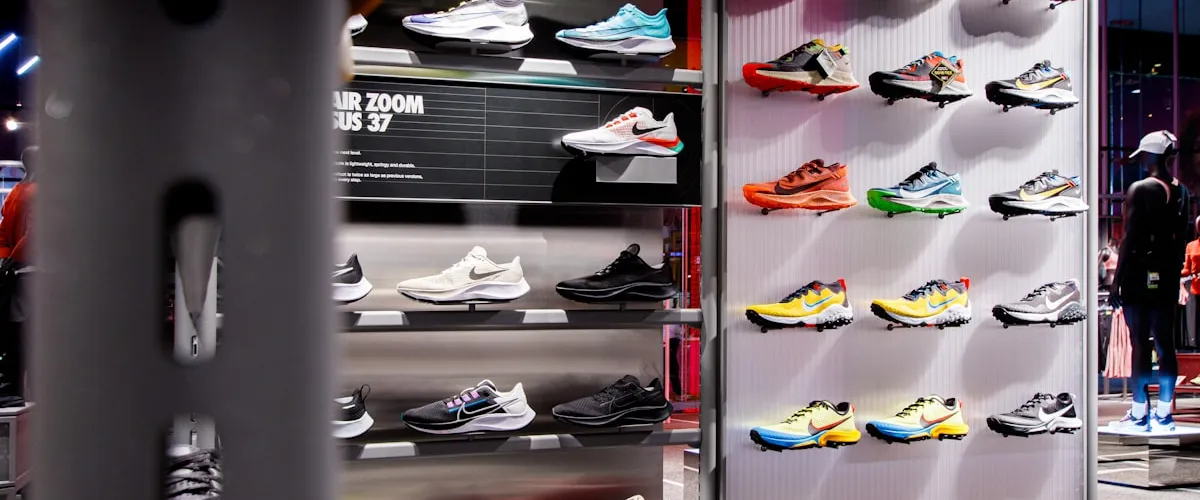
Open shelving offers maximum visibility and the “sneaker wall” aesthetic that many collectors prefer. However, open storage exposes sneakers to dust, light, and air, which accelerates degradation.
If you choose open shelving:
- Position shelves away from windows.
- Dust regularly (at least weekly).
- Rotate displayed pairs every 1-2 months.
- Use UV-filtering window film if shelves are near natural light.
- Consider display cases with glass or acrylic doors for a balance between visibility and protection.
Premium Tier: $500+
Custom Display Cases
Custom-built display cases offer the ultimate combination of visibility and protection. These are typically wall-mounted or freestanding units with glass or acrylic doors, LED lighting, and adjustable shelving.
Features to look for in premium display cases:
- UV-filtering glass: Blocks the ultraviolet light that causes yellowing.
- LED lighting: Cool-running LEDs that do not generate heat. Avoid halogen or incandescent lighting.
- Sealed construction: Minimizes dust infiltration and allows humidity control.
- Adjustable shelves: Accommodates different shoe sizes and box dimensions.
- Locking doors: Prevents accidental damage and adds security.
IKEA Hack: The DETOLF
The IKEA DETOLF glass cabinet has become the unofficial sneaker display case of the community. At roughly $70, it offers glass construction and a clean aesthetic, though it requires modifications for optimal sneaker storage.
Modifications include:
- Adding extra shelves (the default spacing is too wide for sneakers).
- Installing LED strip lighting.
- Adding weather stripping to the door for better dust protection.
- Attaching to the wall for stability.
Climate-Controlled Cabinets
For the most serious collectors, climate-controlled cabinets maintain specific temperature and humidity levels that maximize sneaker longevity.
These systems typically include:
- Temperature regulation (ideally 60-70 degrees F).
- Humidity control (ideally 40-50% relative humidity).
- Air circulation to prevent stagnant moisture.
- HEPA filtration to remove dust and contaminants.
The cost ranges from $500 for a basic dehumidifier-equipped cabinet to $5,000+ for fully integrated climate control systems.
Climate Control Deep Dive
Temperature Guidelines
Temperature affects sneaker materials in several ways:
- Heat (above 80 degrees F): Accelerates adhesive breakdown, causes material warping, and speeds up oxidation (yellowing).
- Cold (below 40 degrees F): Can cause some materials to become brittle, particularly rubber compounds and certain synthetics.
- Ideal range: 60-70 degrees F with minimal fluctuation.
Practical takeaways:
- Never store sneakers in an attic (temperature extremes).
- Avoid garages unless they are climate-controlled.
- Interior closets in climate-controlled homes are good default locations.
- If your home runs warm, a dedicated air-conditioned room or space is worth considering for valuable collections.
Humidity Management
Humidity is the single most important factor in long-term sneaker preservation.
| Humidity Level | Effect on Sneakers |
|---|---|
| Below 30% | Leather can dry and crack; minimal mold risk |
| 30-40% | Safe zone for most materials; leather may need conditioning |
| 40-50% | Ideal range; materials stay supple, mold risk is minimal |
| 50-60% | Acceptable but monitor closely; mold risk begins to increase |
| 60-70% | Dangerous; mold growth becomes likely, hydrolysis accelerates |
| Above 70% | Critical; significant mold and degradation risk |
Humidity control solutions:
-
Silica gel packets: The simplest solution. Place 1-2 packets in each shoe box or crate. Replace or recharge monthly. Rechargeable silica gel packets can be dried out in an oven and reused indefinitely.
-
Room dehumidifier: For collections stored in a dedicated room or closet, a portable dehumidifier set to 45-50% humidity provides excellent protection. Empty the water reservoir regularly or connect a drain hose for continuous operation.
-
Hygrometer monitoring: A digital hygrometer (under $20) lets you monitor humidity levels in real time. Place one in your storage area and check it weekly. Smart hygrometers can send alerts to your phone if humidity exceeds your target range.
-
Desiccant products: Products like DampRid absorb moisture from the air and are useful in closets and small spaces. Replace them when the indicator shows they are saturated.
-
Whole-home humidity control: If you live in a naturally humid climate, a whole-home dehumidifier connected to your HVAC system provides the most consistent protection.
Organization Systems
Cataloging Your Collection
As your collection grows beyond 15-20 pairs, a catalog system becomes essential for keeping track of what you own, where it is stored, and what it is worth.
Spreadsheet approach: Create a spreadsheet with the following columns:
- Brand and model name.
- Colorway and SKU number.
- Size.
- Purchase date and price.
- Current estimated resale value.
- Condition rating (DS, VNDS, used).
- Storage location (crate number, shelf position).
- Notes (special features, stories, planned wear).
App approach: Several sneaker collection apps exist that provide cataloging, valuation, and organization features:
- Nike SNKRS: Tracks your Nike and Jordan collection automatically through purchase history.
- Copdate: Community-driven sneaker collection tracker.
- SoleCollector: Database with comprehensive release information.
Rotation System
A rotation system ensures that you actually wear your sneakers instead of letting them sit indefinitely (which, ironically, can cause as much damage as over-wearing due to hydrolysis).
The 3-tier rotation:
- Daily drivers: 3-5 pairs that you wear regularly and are comfortable beating up.
- Special occasion: 5-10 pairs that you wear for specific events, outfits, or moods.
- Archive: Pairs that are stored for future wear, resale, or collection purposes.
Rotate archive pairs into the special occasion tier periodically to prevent long-term storage degradation. Wearing a shoe occasionally and then cleaning and storing it properly is better for the shoe than never wearing it at all.
Seasonal Storage
If you have a large collection, seasonal rotation keeps your active pairs accessible and your off-season pairs properly stored.
- At the start of each season, pull out seasonally appropriate pairs.
- Clean and store the previous season’s rotation.
- Use the rotation as an opportunity to inspect each pair for damage or degradation.
- Update your catalog with current condition notes.
For cleaning and maintenance before storage, refer to our sneaker care after purchase guide.
Protecting Specific Materials
Leather
Leather sneakers (Jordan 1, Air Force 1, Dunk) require specific care.
- Condition with leather conditioner every 2-3 months if worn, every 6 months if stored.
- Stuff with acid-free tissue paper to maintain shape.
- Store with shoe trees if possible (cedar shoe trees absorb moisture).
- Avoid plastic bags, which trap moisture against the leather.
Suede and Nubuck
Suede and nubuck are particularly vulnerable to moisture and staining.
- Use a suede protector spray before first wear.
- Store with tissue paper and silica gel.
- Keep away from other shoes that might transfer color.
- Brush regularly with a suede brush to maintain nap.
Knit and Primeknit
Knit uppers (Yeezy 350, Ultraboost, Flyknit) are more resistant to creasing but more susceptible to stretching and snagging.
- Store flat without heavy items on top.
- Use shoe trees or tissue paper to maintain shape.
- Keep away from sharp edges or velcro that could snag the knit.
- Wash and fully dry before long-term storage.
Rubber and Midsole Foam
The midsole is the most vulnerable part of any sneaker for long-term storage.
- Humidity control is critical (hydrolysis destroys polyurethane foam).
- Wear the shoes occasionally to flex the foam and prevent crystallization.
- Store with newspaper or tissue paper between the sole and the upper if the shoe is stored loose.
- For vintage pairs (10+ years old), inspect midsoles regularly for signs of crumbling.
Storage Mistakes to Avoid
The Plastic Bag Trap
Storing sneakers in plastic bags (or wrapping them in plastic wrap) is one of the most common and most damaging mistakes. Plastic traps moisture against the shoe, creating a humid microenvironment that accelerates mold growth and hydrolysis. Even vacuum-sealing, while it removes air, also removes the ability of the shoe materials to breathe.
Use acid-free tissue paper instead of plastic for wrapping, and breathable containers (with silica gel) instead of sealed plastic bags.
The Sunlight Display
Displaying sneakers on open shelves near windows looks great for photos but is terrible for preservation. Even a few hours of direct sunlight per day can cause noticeable yellowing within weeks, particularly on icy or translucent soles.
If you want a display near windows, invest in UV-filtering window film and rotate displayed pairs regularly.
The Stack of Doom
Stacking shoe boxes 8-10 high might save floor space, but the bottom boxes experience crushing pressure that warps the shoes inside. Additionally, accessing a pair from the bottom of the stack requires disassembling the entire column.
Limit stacks to 4-5 boxes maximum, or better yet, use drop-front crates that allow individual access.
The Garage or Attic
Garages and attics experience extreme temperature fluctuations and humidity changes. A garage that is 90 degrees F in summer and 30 degrees F in winter creates thermal cycling that stresses adhesives and materials repeatedly. Attics are even worse because they can exceed 130 degrees F on hot days.
Always store sneakers in climate-controlled interior spaces.
Building Your Ideal Setup
The Starter Collection (Under 20 Pairs)
- Clear drop-front crates for each pair.
- Silica gel packets in each crate.
- Acid-free tissue paper for stuffing.
- Interior closet location away from sunlight.
- Digital hygrometer to monitor humidity.
- Total cost: $150-$250.
The Growing Collection (20-50 Pairs)
- Clear drop-front crates plus shelving unit.
- Room dehumidifier for the storage area.
- LED strip lighting for visibility.
- Cedar shoe trees for leather pairs.
- Digital catalog (spreadsheet or app).
- Total cost: $400-$800.
The Serious Collection (50+ Pairs)
- Dedicated room or closet for storage.
- Mix of display cases and crate storage.
- Climate control system (dehumidifier plus temperature regulation).
- UV-filtering glass or window treatments.
- Smart hygrometer with phone alerts.
- Insurance coverage for high-value pairs.
- Total cost: $1,000-$5,000+.
FAQ
How long can sneakers last in proper storage?
With ideal storage conditions (controlled temperature, humidity, and no UV exposure), sneakers can maintain excellent condition for 10-15 years or more. Leather sneakers tend to age better than foam-heavy designs. The key variable is midsole composition: polyurethane midsoles are the most vulnerable to hydrolysis, while rubber outsoles and phylon midsoles tend to be more durable in storage.
Should I keep sneakers in the original box or use clear crates?
Both approaches work, but clear crates offer better protection and accessibility. Original boxes are important for resale value, so the ideal approach is to store the shoe in a clear crate and keep the original box stored separately (folded flat if space is limited). If you must choose one, prioritize protecting the shoe itself over preserving the box.
Is it worth investing in climate control for a small collection?
For collections under 20 pairs with a total value under $3,000, extensive climate control is probably not cost-effective. Basic measures like silica gel packets, interior closet storage, and a $20 hygrometer provide sufficient protection. However, if you own even a few pairs worth $500+ each, the investment in a room dehumidifier ($150-$250) pays for itself by preventing a single pair from degrading.
How often should I inspect stored sneakers?
Inspect your collection at least quarterly (every 3 months). During each inspection, check for yellowing on soles, mold or mildew growth, adhesive separation, any unusual odors (musty smell indicates moisture problems), and condition of silica gel packets (replace saturated ones). If you live in a humid climate, increase inspection frequency to monthly during summer months.
Can I store sneakers in a storage unit?
Standard storage units are generally poor choices for sneaker storage because they lack climate control and experience significant temperature and humidity fluctuations. Climate-controlled storage units are better but still less ideal than home storage because you cannot monitor conditions daily. If a storage unit is your only option, use a climate-controlled unit, invest in extra desiccant products, and visit monthly to inspect your collection.